Healthy BMI for Women: What the Numbers Really Mean
Understanding what makes a Body Mass Index (BMI) healthy for women is one of the most common health questions searched online — and for good reason. Your BMI gives you a quick snapshot of whether your weight falls within a range that's generally associated with lower health risks, but the number alone doesn't capture the full picture of wellness.
Important: This article is for informational purposes only and does not constitute medical advice. Always consult a qualified healthcare professional before making decisions about your health, diet, or weight management.
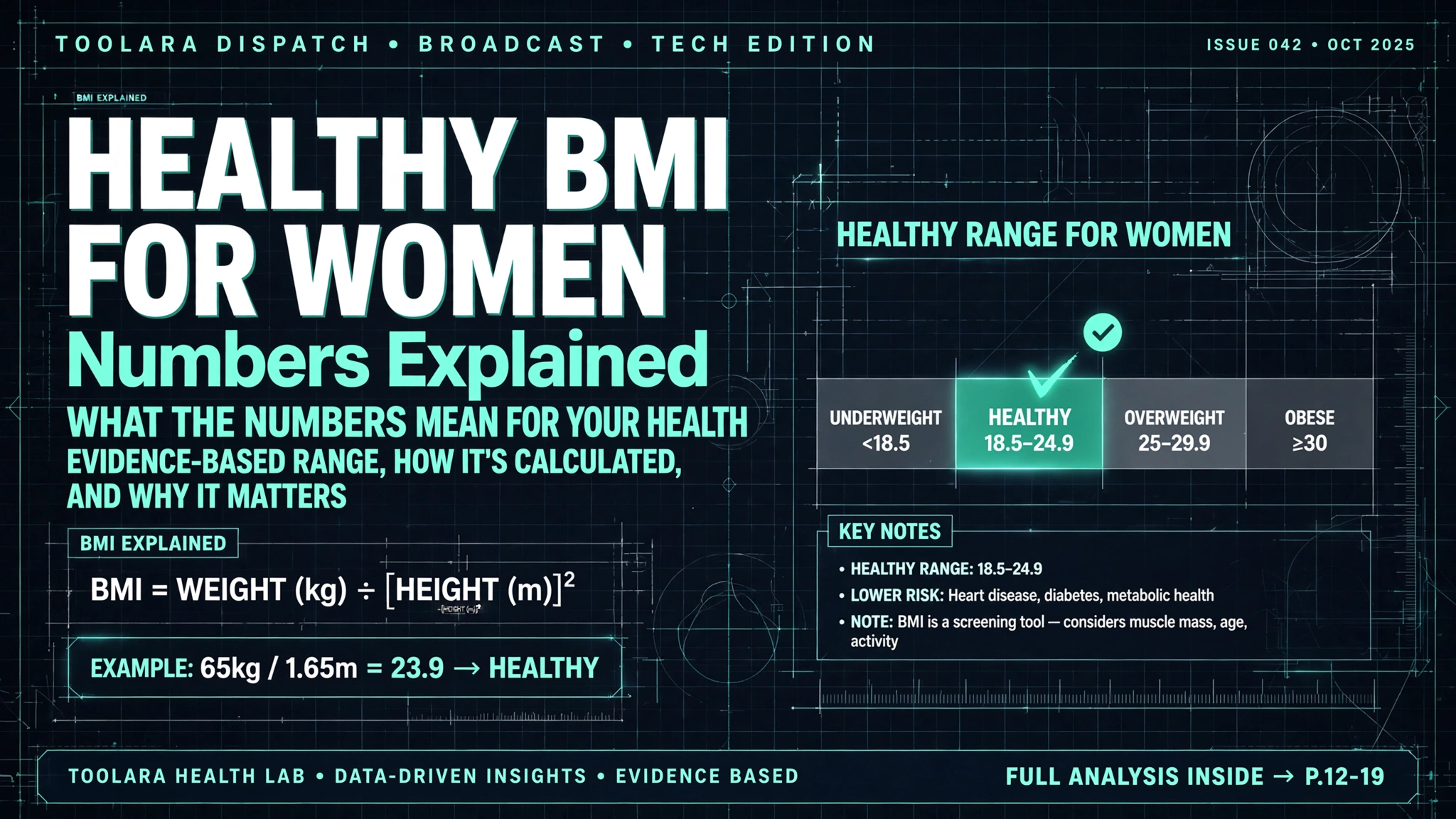
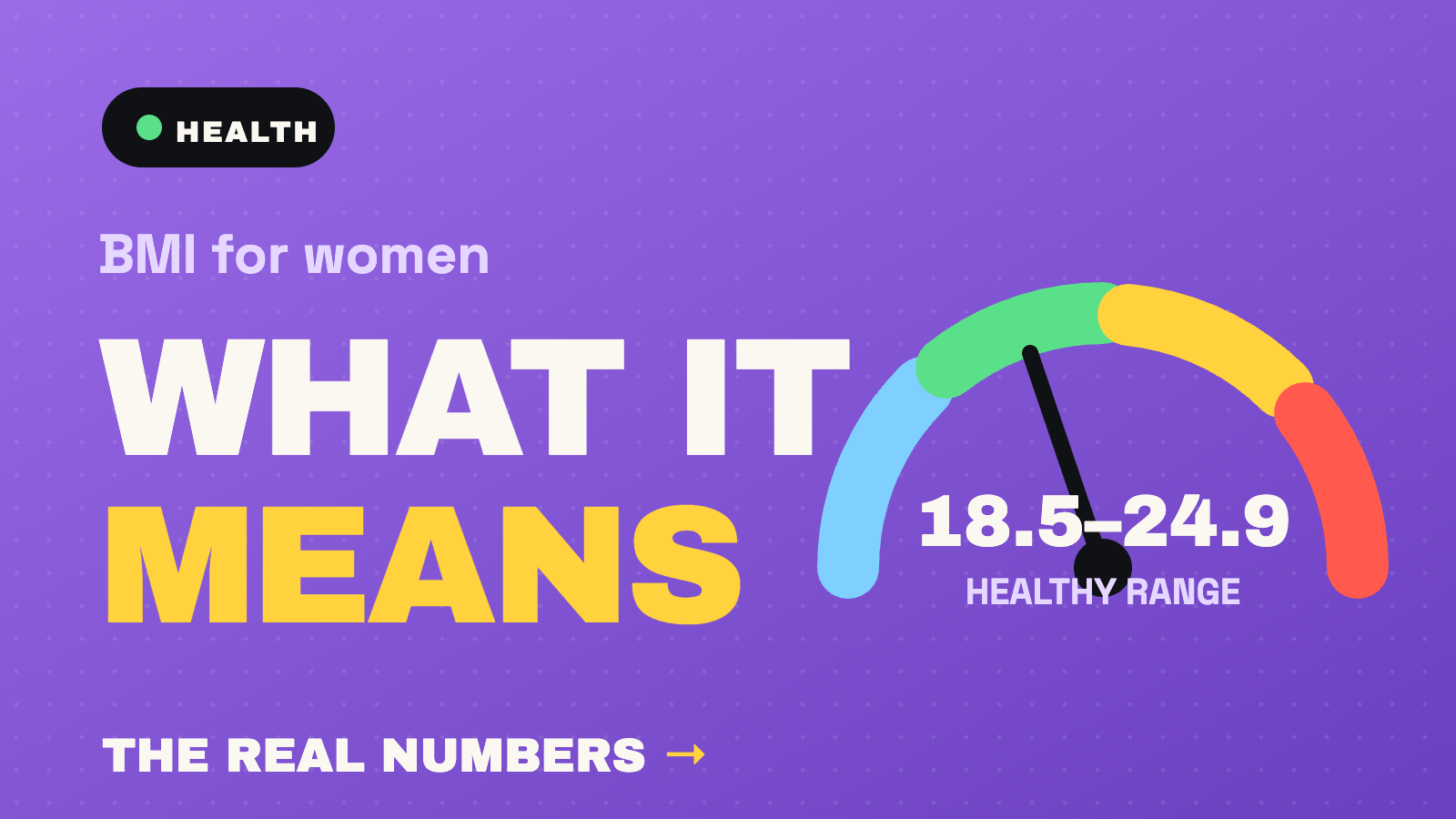
A healthy BMI for women is generally considered to be between 18.5 and 24.9, according to the World Health Organization (WHO) and the Centers for Disease Control and Prevention (CDC). A BMI below 18.5 is classified as underweight, while 25–29.9 is overweight and 30 or above is obese. However, BMI is a screening tool — not a complete measure of health — and factors like age, muscle mass, and body composition also matter.
Healthy BMI for Women: Understanding the Standard Ranges
The BMI scale used today is the same for adult women and men, even though body composition between sexes can be quite different. Originally developed in the 1830s by Belgian mathematician Adolphe Quetelet, BMI is calculated using a person's height and weight.
For adult women, the standard BMI categories established by the World Health Organization are:
| BMI Range | Category | General Health Risk |
|---|---|---|
| Below 18.5 | Underweight | Increased risk (nutritional deficiencies, weakened immunity) |
| 18.5 – 24.9 | Healthy / Normal weight | Lowest risk |
| 25.0 – 29.9 | Overweight | Moderate risk |
| 30.0 – 34.9 | Obesity Class I | High risk |
| 35.0 – 39.9 | Obesity Class II | Very high risk |
| 40.0 and above | Obesity Class III | Extremely high risk |
The normal BMI range for women (18.5–24.9) is associated with the lowest risk of weight-related chronic diseases such as type 2 diabetes, cardiovascular disease, and certain cancers. Large-scale studies, including research published in The Lancet analyzing data from millions of adults, consistently show that mortality risk tends to be lowest within this range.
Key facts about healthy BMI for women:
- Some long-term studies suggest that a BMI in the lower portion of the healthy range (roughly 20–22) is associated with reduced all-cause mortality, though individual variation is significant.
- The same numerical ranges apply to women across all ethnicities in WHO guidance, though some health organizations (such as those serving Asian populations) recommend lower cutoffs.
- BMI is recommended as a screening tool, not a diagnostic one — meaning it can flag potential concerns but doesn't diagnose any condition on its own.
BMI Chart for Women by Age — Does Age Change What's Healthy?
One of the most frequently asked questions is whether the BMI chart for women by age should shift as women get older. The official WHO and CDC categories don't change with age for adults — a BMI of 22 is considered healthy whether you're 25 or 65. However, growing research suggests that slightly higher BMI may be protective in older women.
General guidance by age group:
- Women 18–24: A BMI of 18.5–24.9 is considered healthy. Younger women just finishing growth may sit naturally on the lower end.
- Women 25–34: The standard 18.5–24.9 range applies, with average BMI typically rising slightly due to lifestyle and metabolic changes.
- Women 35–44: Same healthy range, but muscle loss (sarcopenia) can begin to affect body composition.
- Women 45–54: Menopause-related changes often shift fat distribution. The healthy range still applies, but body composition matters more.
- Women 55–64: Some research suggests a BMI of 23–27 may be associated with favorable longevity outcomes in this age group, though evidence continues to evolve.
- Women 65 and older: Multiple studies have found that a BMI between 24 and 29 may be linked to lower mortality in this group, possibly because being slightly heavier helps protect against frailty, falls, and recovery from illness.
The average BMI for women in the United States is approximately 29.6, according to CDC National Health and Nutrition Examination Survey (NHANES) data, which falls into the overweight category — a statistic that highlights why so many women are searching for clarity on what's actually healthy.
Why does age matter?
- Muscle mass naturally declines — research suggests losses of roughly 3–8% per decade after age 30, which can lower weight while body fat percentage rises.
- Bone density decreases, especially post-menopause, affecting overall mass.
- Fat redistribution tends to move toward the abdomen, which is more metabolically risky than fat in the hips or thighs.
This is why measurements like waist circumference (a commonly cited guideline for women is under 35 inches / 88 cm) and waist-to-hip ratio (a commonly cited guideline is below 0.85) are often used alongside BMI to give a fuller picture. Discuss appropriate targets for these measures with your healthcare provider.
Why BMI Alone Doesn't Tell the Full Story for Women
While BMI is convenient, it has well-known limitations — especially for women. Here's why a single number can be misleading:
1. BMI doesn't distinguish between muscle and fat
A muscular female athlete may have a BMI of 27 (technically "overweight") while carrying a low percentage of body fat. Conversely, a sedentary woman with a BMI in the healthy range might have elevated body fat, a condition sometimes called "normal weight obesity," which can carry elevated health risks.
2. It ignores fat distribution
Where you carry weight matters as much as how much you weigh. Visceral fat (around the organs) is generally considered more harmful than subcutaneous fat (under the skin). Two women with identical BMIs can have very different metabolic profiles.
3. It doesn't account for hormonal differences
Women's bodies naturally store more fat than men's — a biological feature, not a flaw. Hormonal events like pregnancy, menopause, and conditions such as polycystic ovary syndrome (PCOS) can all influence weight and BMI without necessarily reflecting health changes.
4. Ethnicity affects risk at the same BMI
Women of South Asian, East Asian, and some Middle Eastern backgrounds may face higher metabolic risk at lower BMIs. Some health authorities recommend a healthy upper cutoff of 23 rather than 24.9 for these populations.
For a more individualized target weight that takes your frame and height into account, try our ideal weight calculator, which uses multiple validated formulas to provide a personalized range.
Better health markers to pair with BMI:
- Body fat percentage (commonly cited healthy ranges for women vary by age; consult your healthcare provider for guidance)
- Waist circumference (under 35 inches / 88 cm is a commonly cited guideline)
- Waist-to-height ratio (a ratio under 0.5 is a commonly referenced target)
- Blood pressure, cholesterol, and blood sugar levels
- Cardiovascular fitness (VO2 max or resting heart rate)
How to Calculate Your BMI and What to Do With the Result
Calculating your BMI is straightforward. The formula is:
BMI = weight (kg) ÷ height² (m²)
Or in imperial units:
BMI = (weight in pounds ÷ height in inches²) × 703
Example calculation:
A woman who is 5'5" (165 cm) and weighs 140 lbs (63.5 kg):
- 63.5 ÷ (1.65 × 1.65) = 23.3 BMI → Healthy range
Rather than crunching numbers manually, you can use our free BMI calculator for women to get an instant result with category labels and personalized context.
What to do after calculating your BMI:
- Don't panic over a single number. BMI is a starting point, not a verdict on your health.
- Look at trends, not snapshots. A consistent BMI over years is more meaningful than a single reading.
- Pair BMI with other measures like waist circumference and body fat percentage.
- Consider your daily energy needs. Use our calorie calculator to get a general estimate of your calorie needs — keep in mind that individual requirements vary and a registered dietitian can provide personalized guidance.
- Consult a healthcare professional if your BMI falls outside the healthy range or if you have concerns about body composition.
Healthy habits matter more than BMI alone:
- Current guidelines from organizations such as the CDC recommend at least 150 minutes of moderate-intensity aerobic activity per week, plus muscle-strengthening activities on two or more days per week.
- Eat a diet rich in whole foods, lean protein, fiber, and healthy fats.
- Prioritize 7–9 hours of sleep, since poor sleep is associated with weight gain in research literature.
- Manage stress, which affects cortisol and can contribute to abdominal fat storage.
- Stay hydrated and limit ultra-processed foods.
Frequently Asked Questions
What is a healthy BMI range for women over 50?
For women over 50, the official healthy BMI range remains 18.5–24.9, but emerging research suggests a slightly higher range of 23–27 may be associated with better health outcomes and longevity in older adults. After menopause, maintaining muscle mass through strength training becomes particularly important, since muscle loss can mask weight changes on the scale. Bone density and waist circumference often matter more than BMI alone at this stage of life. Women over 50 should discuss their individual targets with a healthcare provider rather than focusing solely on a single BMI value.
Can a woman have a normal BMI and still be unhealthy?
Yes. This condition is sometimes called "normal weight obesity" — when a woman has a BMI in the healthy range (18.5–24.9) but a high body fat percentage and low muscle mass. Research suggests a meaningful proportion of normal-weight adults may have metabolic risk factors typically associated with obesity, including insulin resistance, elevated cholesterol, and high visceral fat. Lifestyle factors like a sedentary routine, poor diet, smoking, and chronic stress can all contribute to poor health regardless of BMI. This is why pairing BMI with body composition analysis, waist measurement, and basic blood work gives a more accurate health assessment.
What BMI is considered underweight for women?
A BMI below 18.5 is classified as underweight for women. The underweight category is sometimes further subdivided into mild thinness (17.0–18.4), moderate thinness (16.0–16.9), and severe thinness (below 16.0). Being underweight can carry serious health risks including weakened immunity, nutritional deficiencies, osteoporosis, irregular or absent menstrual cycles, fertility issues, and anemia. If your BMI is below 18.5, it's important to consult a healthcare professional to determine whether the cause is genetic, related to high activity levels, or due to an underlying medical or nutritional issue. Any approach to reaching a healthier weight should be guided by a qualified professional.
How is BMI calculated for women?
BMI is calculated using the same formula for women and men: weight in kilograms divided by height in meters squared (kg/m²). In imperial units, the formula is (weight in pounds ÷ height in inches²) × 703. For example, a woman weighing 150 pounds at 5'6" tall (66 inches) would calculate her BMI as (150 ÷ 4,356) × 703 ≈ 24.2, placing her in the healthy range. Although the formula doesn't differ by sex, the interpretation can — women naturally carry more body fat than men at the same BMI, which is biologically normal. To skip the math entirely, you can use our free BMI calculator for instant results.
Ready to Check Your BMI?
Understanding your BMI is a useful first step in taking charge of your health — but remember, it's just one piece of the puzzle. Use our free BMI calculator to find your number in seconds, see which category you fall into, and get clear context on what it means for your health journey. Combine your BMI result with smart lifestyle choices, regular checkups with your healthcare provider, and other body composition measures to build a complete picture of your wellness — because real health is so much more than a single number on a chart.